
With each passing shift, are you sure your workshop can meet the ever-increasing standards for quality and finish? I have witnessed firsthand the successes and failures of automated grinding robots at the shop floor throughout my twelve years of experience in the field.
This article will define an automated grinding robot, go over the effects of burr height and edge radius on output, discuss the role of fixtures in shaping precision, and discuss which models are most suited to various workshop sizes.
What Is a Robotic Grinding Machine and Why is It vital in Workshop?
An automated grinding robot is an arm with programming capabilities that can grind, deburr, or polish metal components using abrasive tools. A repeatable, automated procedure takes the role of hand grinding. These systems can adjust to different parts thanks to force control, vision sensors, and path planning. Iron, steel, aluminum, and rare alloys are all within their expertise.
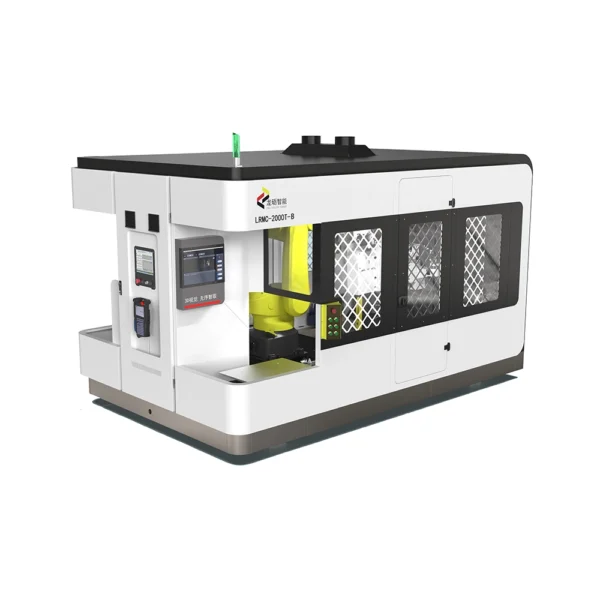
The pressure is adjusted by the robot based on real-time feedback. Thus, over-grinding or missing areas are prevented. To create a complete weld-and-finish line, many units are paired with robotic welding cells. Shops improve efficiency, cut down on waste, and protect employees from dust and vibration. At its foundation, contemporary grinding automation rests on these devices.
Core Technical Specs of Robotic Grinding Systems
| Specification | Entry Level | Mid Range | High Performance |
| Payload Capacity | Up to 10 kg | 10–30 kg | 30–100 kg |
| Repeatability | ±0.5 mm | ±0.1 mm | ±0.02 mm |
| Spindle Speed | 3,000 RPM | 6,000–12,000 RPM | Up to 30,000 RPM |
| Force Control | Fixed pressure | Basic feedback | Active force control |
| Programming | Teach pendant | Offline software | AI path planning |
| Typical Use | Light deburring | Surface finish | Precision edge radius |
How Does Edge Radius Control Decide the Quality of Your Finished Part?
A part’s edge radius is the little arc that remains after grinding. Parts that are too sharp might cause wounds or cracks when used. Because it is too spherical, it does not pass fit-up inspections. With active force control, a commercially available automated grinding robot can maintain an edge radius of less than 0.05 mm over thousands of components. Expertise and stamina of the grinder determine the grinding speed of a manual machine. Bots never get tired.
Part one and part ten thousand are both subjected to the same amount of force. Consider this consistency benefit in relation to the cost of labor when evaluating the automated grinding robot pricing. Minimizing rework and customer returns is a direct result of investing in the correct machine.
Advantages & Disadvantages: Edge Radius Automation
| Factor | Advantage | Disadvantage |
| Consistency | Same radius every cycle | Setup time is high initially |
| Speed | 3x faster than manual | Robot cost is significant |
| Quality | Meets tight specs reliably | Programming skill needed |
| Safety | No operator injury risk | Maintenance needs training |
Key Points on Edge Radius Robot Selection
- Select a Automated Grinding Robot that can provide active force feedback for components with a tolerance of less than ±0.05 mm.
- When commissioning, make sure to use a profilometer to confirm the edge radius.
- Get a few demo pieces from the supplier before you shell out cash for an automatic grinding robot.
- If you want flawless results every time, combine edge radius grinding with in-line vision inspection.
Does the Specification of Burr Height Affect the Necessity?
As a result of cutting or stamping, an undesirable elevated edge known as burr height is produced. Assembly mistakes, seal failures, and bodily harm can result from burrs that are too high. The maximum allowable burr height varies by industry but is typically between 0.02 and 0.5 mm. Burrs may be more quickly and safely removed by using a robotic grinding machine instead of manual tools.
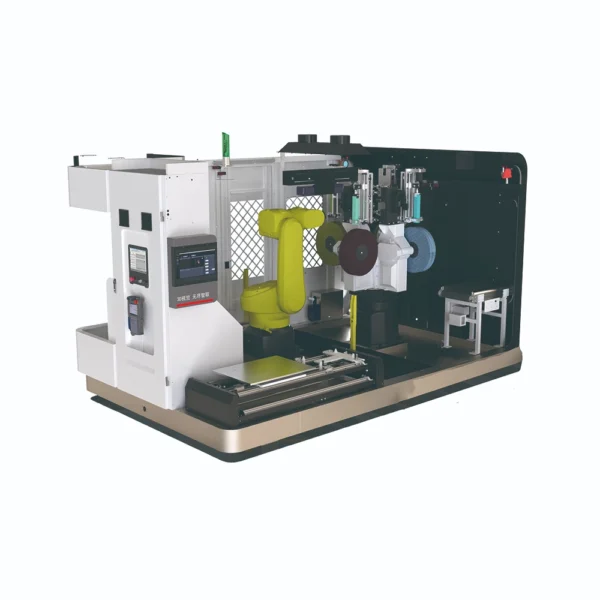
The force torque sensor allows the robot to detect the burr and makes the necessary course corrections. This ensures that only necessary elements are removed. Autonomous quality records are also logged with each pass. The rate of burr removal is an important return on investment (ROI) metric for businesses evaluating the costs of advanced automated grinding robots. We can produce more components in a given shift if the cycle time is faster.
Manual Deburring vs Robotic Deburring
| Criteria | Manual Deburring | Robotic Deburring |
| Consistency | Varies by operator | Repeatable every cycle |
| Speed per part | 60–120 seconds | 15–30 seconds |
| Burr height control | Visual estimate | Sensor-verified |
| Labor cost per year | High (fatigue, errors) | Low after payback |
| Traceability | None | Full digital log |
The process of manual deburring is based on visual inspection and tactile sensing. Robots rely on data and sensors. The option is obvious for shops that have hard and fast requirements for burr sizes. Every time, the robotic grinding machine comes out on top in terms of speed, safety, and traceability.
- Burr height is detected both before and after grinding using force torque sensors.
- In order to deal with various sorts of burrs, robots can change tools mid-cycle.
- Reduced time spent switching between part numbers is a benefit of offline programming.
- Each cycle’s data records may be used to assist quality audits conducted by ISO and IATF.
What Role Does Fixture Design Play in Robotic Grinding Accuracy and Output Rate?
The component remains immobile when the robot grinds it thanks to a fixture. Vibration, slide, and broken components result from poorly designed fixtures. Compliance pads, clamps, and locators are all part of a high-quality fixture. With each cycle, they set the component in the same exact spot. Robots that use a fixed coordinate system must pay close attention to this.
A tiny grinding cell or welding robot’s fixture can add up to 20% to the cell’s overall cost. This is not a place where money should be saved. Every guidebook for a sophisticated automatic grinding robot has an entire chapter devoted to setting up the fixtures. A shorter cycle time, better surface polish, and longer tool life are all results of well-designed products.
Frequently Asked Questions
Where can I get a robot that grinds automatically?
System integrators, original equipment manufacturer robot sellers, and dedicated automation websites are good places to look for an automated grinding robot. A variety of robotic grinding machines are available from LongLi, along with helpful customer service and affordable prices.
- Look for direct pricing on OEM vendor portals.
- Turnkey cell quotes can be obtained through integrators.
- Take a look at LongLi for models that are ready to ship as well as bespoke constructions.
What are the ways in which automated grinding costs less in a workshop?
Robots that grind reduce human error, waste, and redos. On a grinding station, a single robot can do the work of two or even three humans. Costs associated with vibration and dust exposure in the workplace are also decreased.
- Savings in labor of 40–70% are typical in the first year.
- Maintaining a constant strain can reduce scrap rates by 30–60%.
- It uses less energy per part than the same amount of manual labor.
Can a grinding cell be integrated with a tiny welding robot?
Yes. It is possible to house a grinding station and a miniature welding robot in the same cell frame. Combined weld-grind systems are frequently designed by robotic welding cell manufacturers. The robot can change its end-of-arm tools autonomously.
- Up to 40% less floor area is required when cells are combined.
- Coding becomes easier with a shared controller.
- Running the grind and weld in succession improves cycle time.
What is the scope of the handbook for the high-tech automatic grinding robot?
This high-tech automatic grinding robot comes with a comprehensive handbook that details everything from how to set it up and calibrate it to how to change tools and when to do maintenance. In addition, there are diagnostic codes and instructions for tweaking the force control.
- Chapter on safety discusses guarding and risk assessment.
- Methods for aligning fixtures are detailed in the calibration chapter.
- Tasks for each week, month, and year are detailed in the maintenance section.
How can I calculate the profitability of the automated grinding robot’s features?
Analyze the benefits of automated grinding robots in terms of reduced cycle time, scrap savings, and manpower substitution, as well as the cost of their features. Put together a basic return on investment (ROI) model. From 18 to 36 months, the majority of shops reach break-even.
- Determine the yearly running cost of the robot in comparison to the labor cost.
- Update the model with the savings from scrap and rework.
- Include the expenses for tooling and maintenance.
Conclusion
Specifications alone are insufficient to select the best automated grinding robot. The interplay between fixture design, burr height precision, and edge radius control are key considerations. The factors are cumulative.
When it comes to grinding automation, LongLi is the best option for workplaces that are prepared to spend. Starting with basic force-controlled grinding cells and progressing to high-tech deburring arms, LongLi has you covered. All the way to commissioning and after-sales servicing, their staff is there to help you with layout planning.