
Would you put a brand new machine in your line? Most buyers never get to see what happens before a machine reaches the market. Testing takes place behind closed doors. This happens in tiny test rooms long before a machine ever appears on a website. If you know how the metal finishing equipment manufacturers test their new models, you can better judge a machine before you buy it.
In this article we will talk about the three steps that most manufacturers will go through which are prototype, trial and validation. It also shows how testing varies with type of deburring machine. And it gives you actual questions to ask before you buy.
What Do Metal Finishing Equipment Manufacturers Build?
Metal finishing equipment manufacturers are companies that make machines used to deburr, polish and finish metal parts. They take the sharp edges off. They take the rough edges off. They prepare parts for the next stage of production.
The subject of this article is deburring machines. This is the machine type that most buyers are looking for. The following table lists the main machine types.
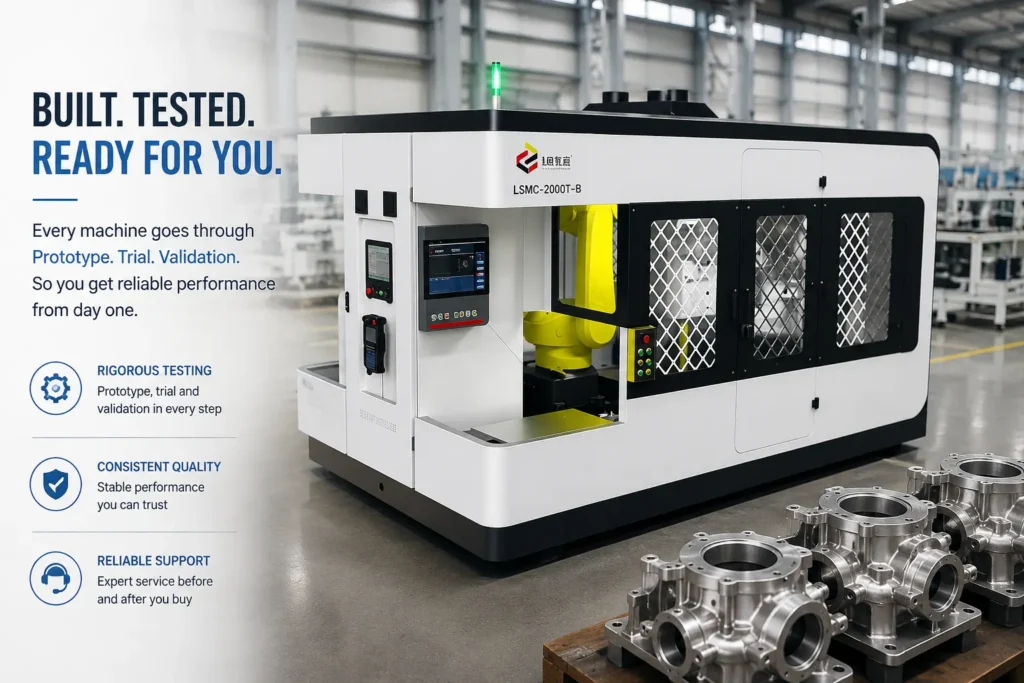
Common Equipment Categories
| Equipment Category | Primary Function | Typical Material Handled |
| Deburring machines | Remove burrs and sharp edges | Pipes, tubes, sheet metal |
| Polishing machines | Smooth and brighten surfaces | Stainless steel, aluminum |
| Vibratory finishing systems | Give an even edge and surface finish | Small to mid-size parts |
| Thermal deburring units | Remove burrs with a quick, safe burn | Cast and machined parts |
Prototype: Where Every New Machine Starts
The first working copy of a new machine is a prototype. It’s designed to test the feasibility of an idea. It’s not the finished product. It solves one problem: Will this design work?
At this point, engineers test new parts. They try different materials. They test motors of different sizes. Small mistakes are normal and inexpensive to fix. A mistake found later, after full production begins, costs much more.
Core Steps in Prototype Development
- Early sketches and CAD models of new design concepts
- Selection of materials for frames, rollers and wearing parts
- First, build with off-the-shelf, standard parts
- Basic tests required to ensure moving parts function correctly
- A review internally before the design is trial-tested
Trial: Testing Under Real Working Conditions
Trial testing is the testing of actual parts through the prototype. This is done in conditions close to a real factory. Here a machine proves itself, or has problems that design checks can’t find on their own.
During trials, workers pass real pipes, tubes or sheet metal through the machine. They do it over and over again. They get to see how the machine runs over many hours, not just one quick test.
What Trial Testing Measures
| Equipment Category | Primary Function | Typical Material Handled |
| Deburring machines | Remove burrs and sharp edges | Pipes, tubes, sheet metal |
| Polishing machines | Smooth and brighten surfaces | Stainless steel, aluminum |
| Vibratory finishing systems | Give an even edge and surface finish | Small to mid-size parts |
| Thermal deburring units | Remove burrs with a quick, safe burn | Cast and machined parts |
Validation: Proving the Machine Is Ready
Validation is the phase where a manufacturer shows a new machine is meeting its objectives. This also shows the safety of the machine. This step is the dividing line between “it works” and “it’s ready to sell”. A machine can fail validation even if it passes trial testing if it does not yield the same good result every time.
Safety and Compliance Checks
Validation is often just rerunning the same job over and over. It makes sure results are close every time, not only once. It also verifies the machine for safety rules like safeguards and safe wiring. The manufacturer compares these results with the manufacturer’s goals before the machine is approved for sale. Only after this the machine goes into the standard product lineup.
How Testing Differs Across Deburring Machine Types
The test methods vary by type of machine. Each one is about a different shape or material. Small metal finishing equipment manufacturers have no choice but to test each machine.
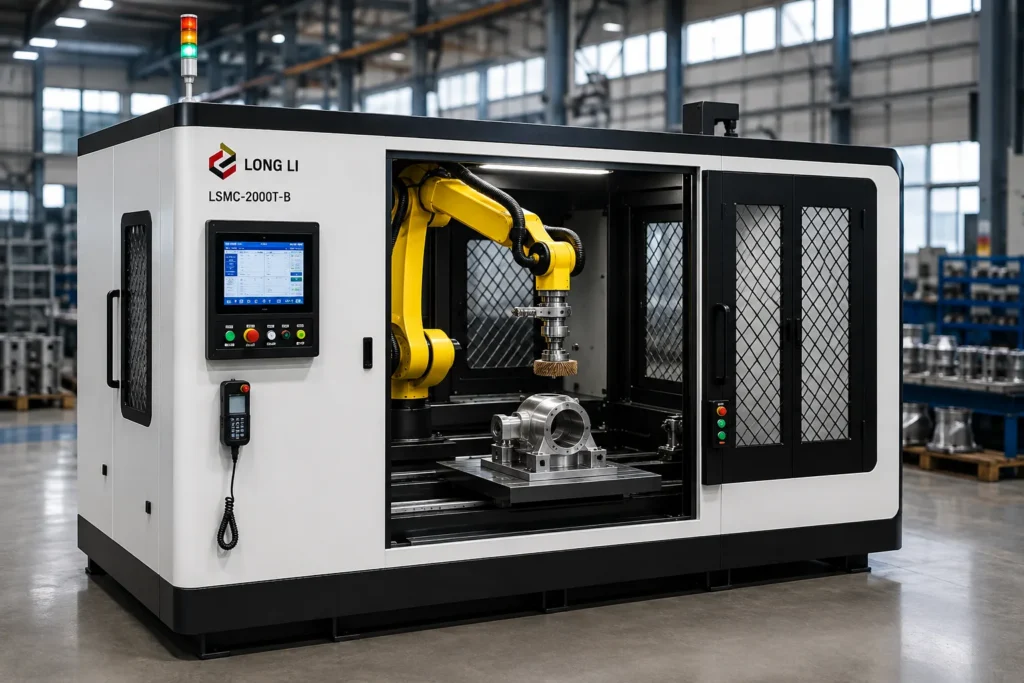
If you are looking at metal finishing equipment for sale, ask how well the machine removes burrs from the inside and the outside of the pipe. This should work on all sizes of pipe. Tube deburring machines for sale are often tested for how the tube wall can hold up under pressure, since thin tube walls are more easily bent. It is necessary to test the sheet metal deburring machine for sale for a number of sheet thicknesses to ensure that the edge remains even from thin to thick sheets.
Thermal Deburring Machines for Sale Need a Different Type of Test These checks are related to the burn cycle and gas safety. A vibratory deburring machine for sale is tested for long runs to ensure that the media and finish remain consistent for hours on end.
Why Testing Rigor Should Influence Your Buying Decision
You should worry about the rigor of test. It tells you how well a machine will perform in your shop floor. The manufacturer that skimps on testing is more prone to market a machine with hidden flaws.
Red Flags to Watch For
- When asked, no clear steps for testing or validation were provided.
- No desire to provide test results, sample data or references
- No mention of any test runs on real parts prior to launch
- Uncertain answers to the length of time the machine was being developed
What to Ask Before You Buy Deburring Machines for Sale
Before buying any deburring machines for sale, you can protect yourself by asking clear questions. Any manufacturer who has a real testing process will answer these quickly and without any fuss.
Buyer’s Checklist
- What validation tests did they run on this precise model?
- Test results or real customer cases, can you prove me?
- What warranty and support do I get with the machine?
- Did they test the machine on my type of material or part?
- What is the typical delivery time after I place my order?
Industry Standards and Compliance for Metal Finishing Equipment
Best metal finishing equipment manufacturers build machines to known safety rules, not to their own taste. Such rules often include machine guards, safe wiring and noise levels. Such rules are laid down by groups such as OSHA in the United States, or similar groups in other countries. It’s not unreasonable to ask a seller which rules their machine is compliant with. If they can’t give a clear answer, that’s a warning sign.
Frequently Asked Questions
How do metal finishing equipment makers test new machines?
Metal finish equipment makers generally validate new machines in three steps: build a prototype, run trials on real parts, and perform formal validation. Each step finds a different kind of problem before the machine gets to the buyers.
- The prototype step proves the design works at all
- The trial step checks how it works in real working conditions
- The validation step ensures that the results are repeatable and safe
How does prototype testing differ from validation?
Prototype testing is to find out if a design idea works at all. Validation proves that every time the design is completed, it accomplishes its goals. Testing of the prototype is done early . Small failures are expected. Validation is the last one . The machine has to pass each time .
What should I ask before buying a deburring machine for sale?
Before purchasing a deburring machine for sale, request the test results, the warranty, and if it was tested on your type of material. These questions reveal whether the seller has real testing metal finishing process equipment.
- Ask for test results or actual case studies to look at
- Check warranty period and support options
- If you can ask other buyers for references
Different types of deburring machines, do they have different tests?
Yes , there are different types of deburring machines that require different tests , because they work with different shapes or materials . Size and wall strength are tested on pipe and tube machines. The edge finish and consistent results over time for the sheet metal and vibratory machines are tested.
How long does the machine validation process normally take?
Machine validation time depends on the machine and the complexity of the machine as it is dependent on how much checking is needed. Simple machines can run faster than large multi-step finishing lines.
- Testing is often repeated across many batches
- Safety checks might take time depending on local rules
Why does it matter if equipment vendors are tested rigorously?
The importance of rigor in testing is that it shows how well a machine will perform once it’s in a real shop. Sellers who are transparent about their test steps usually have machines that need less repair over time.
Conclusion
Quality gear does not happen by accident. The best metal finishing equipment manufacturers take prototype, trial and validation testing seriously. When you ask metal finishing equipment manufacturers about that process, they are also receptive. “It’s not a weird question, it’s a fair and smart question to ask about test steps before you buy.”
LongLi is worth a look if you’re looking for a manufacturer who can walk you through its test process in plain terms. Price, wait time, and looking at how a seller tests their machines gives you a better idea of what you’re about to buy.