
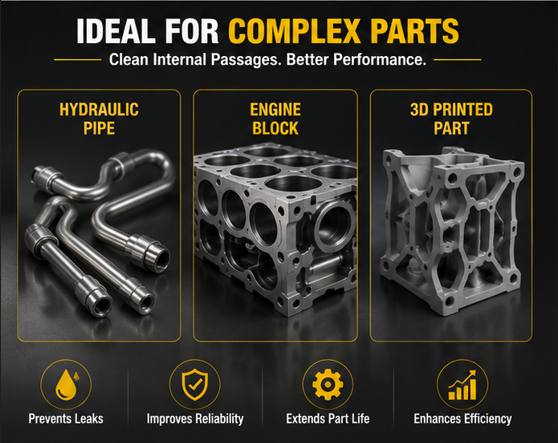
Can a single burr removal machine clean a curved hydraulic pipe, a cast engine block and a 3D printed part? But can it do this without damaging the walls inside? Frequently asked by shops making parts with hidden holes.
One thing cleaning people learn inside very fast. Cleaning an outside edge is a different job than cleaning inside a hole. Treating them the same way often results in bad parts later.
This guide compares machine types for access inside. It makes clear what is really meant by ‘reach’ and ‘access’. It also guides you on how to select the right machine for your part.
What Is a Burr Removal Machine?
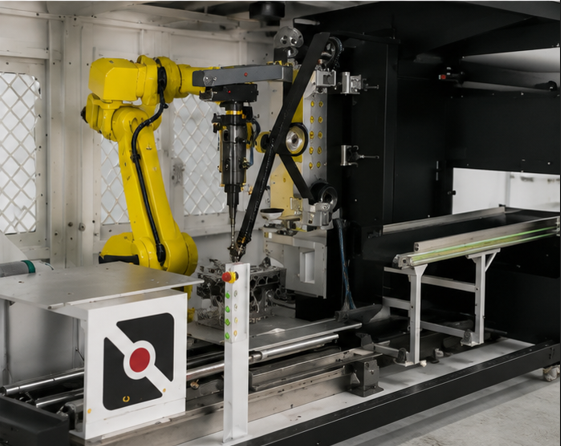
A deburring machine removes small pieces of excess metal or plastic. These bits are called burrs. Burrs are left behind when a part is cut, drilled or cast. Such machines use abrasive grit, chemicals, heat or tools to smooth the edge. It does so without altering the size or shape of the component.
Almost every machined or cast part has burrs. They can lead to leaks, poor seals, or premature wear if left in place. Burrs inside a part are harder to fix than burrs on the outside, since you can’t easily see or reach them. People search for a burr remover machine on the web or even burrs remove machines. These searches are for generally the same type of burr removal machine equipment.
Quick Facts at a Glance
| Fact | Detail |
| Purpose | Removes extra edge material after cutting or casting |
| Common methods | Abrasive flow, heat, electrochemical, brushing |
| Main risk if skipped | Leaks, bad seals, early part wear |
| Hardest burrs to remove | Burrs inside bent or branching holes |
| Typical industries | Cars, aircraft, hydraulics, medical devices |
Why Internal Passages Are Different
Burrs wait in holes behind bends and branches. A drill or reamer will nicely clean an outside edge. But it cannot turn a corner in a block or a pipe. It’s hard to clean a burr at the bottom of a hole. Cleaning a burr where two holes meet is even tougher. This job must be done by a process that goes through the hole, not just the aperture. Therefore, shops with hydraulic blocks or cast parts need a different burr removing machine. It is not the same one that is used on the outside.
Which Machine Types Reach Internal Passages Best?
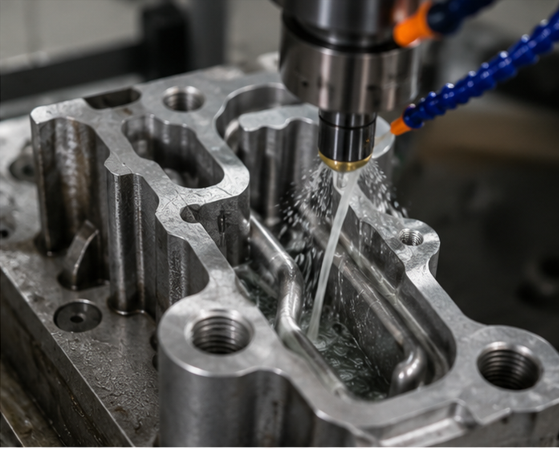
Three types of process are best for getting inside holes. These include abrasive flow machining, thermal energy deburring and electrochemical deburring. Each of them pushes a working substance through the hole itself. It does not use a stiff tool that has to fit in the space. Works well for a burr around a bend no one can see.
Ways to Reach Internal Passages
- Abrasive flow machining (AFM): A thick, gritty paste is forced back and forth through the hole. It made every wall it reached smooth, even the bends and branches.
- Thermal energy method (TEM): Starts a small controlled gas flash in a closed box. Thin burrs instantly vaporise with the heat. It does no harm to the base metal.
- Electrochemical deburring (ECD): with flowing liquid and shaped metal tool. This melts the burr away by means of a controlled reaction. No tool ever touches the part.
- Robotic and CNC-guided tooling: Automated burr removal machines use bendy shafts or moving arms. It can go into straight or slightly curved holes. Stiff tools still have difficulty with sharp bends.
Abrasive flow extrusion works better on bent or branching holes. This is because the paste follows the path and doesn’t need a straight line.
How Do Access, Reach, and Machine Type Compare?
The choice between these methods is determined by three things. First, how does the tool or medium get in? Second, how does it still work once in? 3. What restrictions are there on part, shape or material? Access is whether a process can even enter. Reach is the distance, or how far around a bend, the process still works well.
Comparison at a Glance
| Method | Access Type | Typical Reach | Best Part Shape | Main Limit |
| Abrasive flow machining | Media flows through the hole | Follows the full hole, even at bends | Curved or branching holes | Slower for large batches |
| Thermal energy method | Heat fills a sealed chamber | Reaches all surfaces the gas touches | Cast or forged closed spaces | Not great on very thin walls |
| Electrochemical deburring | Liquid flow with a shaped tool | Reaches shapes that match the tool | Repeat, high-volume holes | Tool must be built per part |
| CNC or robotic tooling | Tool enters the hole directly | Limited by tool stiffness and bends | Straight or gently curved holes | Struggles with sharp bends |
The key is you need abrasive flow or heat for bent or branching holes. CNC tools can often be used for straight holes, at a lower cost.
What Should Buyers Check Before Choosing Equipment?
Buyers should look for three main things. See if the media or tool can get in. Let’s see how far it can go. See if the result is able to be looked at. If no one can verify what happened inside a hole out of sight, a seller’s word means very little.
Buyer Checklist for Internal Passage Equipment
- Access check: Find out if the process has been used on a hole shape like yours before, not just a standard bore.
- Reach check: Ask for sample parts. “The results have to be clean at the bottom of the hole, not just at the top.”
- Inspection method: small camera, air-flow test, 3D scan. These confirm the result, for from the outside you cannot see inside.
- Repeat check: For long runs, find out if the results are consistent across multiple parts, not just one sample.
A Note on Related but Different Equipment
A clothes burr remover machine is quite another thing. It’s made for lint, fuzz and pilling on fabric, not for metal or plastic edges. The two machines are named alike, because they cut away what is not wanted. But their tools and safety regulations are different.
Where Does This Fit With CNC Machining Parts?
Normally, the burr removal and CNC machining of parts are done in two steps. The first step is to clean up the edges right after you’ve cut. This is referred to as in-line deburring. The 2nd step is a special pass for the inside holes that the cutting tool could never quite clean out.
The second step is often what causes parts to fail later. It is most noticeable in fuel or hydraulic systems where a loose burr can break off and hurt another part. For this step, you should select the metal burrs removal machine based on the hole shape, not just the shop’s typical process.
What Does Internal Passage Deburring Cost?
The cost is primarily determined by the part volume, the hole shape and the need for custom tooling. Low volume or test pieces often cost more per piece, because tools like fixtures have not yet been spread across many units. Have your supplier quote a price based on your actual part drawing. A generic quote will often miss the real cost of a complex hole.
Common Mistakes When Selecting Equipment
Many shops only judge equipment by outside results. And this is the biggest mistake in this process. Just because the outside edge is smooth does not mean the inside is clean. Often this problem is hidden until testing fails by not doing internal checks.
Another mistake is to ignore what the part is made of. Heat-based methods do not work on all metals or wall thicknesses. A quick check with your supplier before you buy can avoid most of these.
Frequently Asked Questions
What causes internal passages to have burrs in them?
Drills, taps or reamers will push material to the edge rather than cut it cleanly and burrs are produced.
- Most often found at the intersection of two holes in a part
- Loose bits can also be caught during forming of cast and 3D printed parts
Can one burr removal machine do every passage shape?
There is not a single burr removal tool that is suitable for every passage shape.
- Straight holes often work well with CNC or robot tools
- Curved or branching holes often require abrasive flow or heat methods
How do you check internal deburring without looking inside the part?
We verify internal deburring with a small camera, an air-flow test or a 3D scan, not by eye.
- Air-flow tests are effective on fuel hydraulic parts
- Camera video shows if curved or branching holes are actually clear
Is thermal energy deburring safe for thin-walled parts?
Thermal energy deburring is not safe for very thin walls without a test first.
- Cast walls thin parts are more influenced by heat than thick
- Check the material and wall thickness before applying this method to a thin part
What is the difference between a hand tool and a dedicated deburring machine?
Dedicated deburring equipment is automatic machinery that is built for one job, such as heat or abrasive flow.
- Hand tools are best for small runs or test parts.
- Automatic equipment gives steadier results on big production runs.
Do burr removal machine manufacturers provide custom tooling for certain passage shapes?
Many of the manufacturers of this equipment do offer custom tools for special shapes of openings.
- In electrochemical deburring, custom electrodes are frequently used
- Abrasive flow work often uses custom fixtures
Conclusion
A tool that only cleans outside edges won’t cut it for complex internal passages. You need a process that can bend around corners. This is a task best performed by abrasive flow, heat and electrochemical methods rather than stiff tools. Still, the right choice depends on the shape of the hole, the material of the part and the number of parts you need.
LongLi is a good place to start if shops want to compare choices. It has many deburring methods, not one. That makes it easy to match a real part drawing to the correct process before buying any burr removal machine equipment.