
How long does it take to train a new worker on a metal finishing line? This is the question most shop owners ask. The answer often depends on the machine.In shops with a finishline deburring machine, a clear pattern emerges.
In the past, it took months to hand-train new workers. Now they can learn a lot faster. That is because the machine controls the pass, speed and edge finish. The worker only directs the process.
Here are three easy things this article covers. What is a finishline deburring machine, first. Second, why do easy screens and automation speed people’s learning? Third, what you need to look for if you want a short training time.
What Is a Finishline Deburring Machine?
A finishline deburring machine is used to remove sharp edges and burrs from metal parts. This is done after the metal has been cut, punched or laser cut. The part passes through brushes or belts. They cut the edge in one stroke.
Hand tools are used in old-style deburring. Each edge is ground by hand by a worker. This finishing equipment works in a different manner. Every time it gives the same answer. That’s why new workers learn the job faster. Their job is to watch the machine, not to grind by hand.
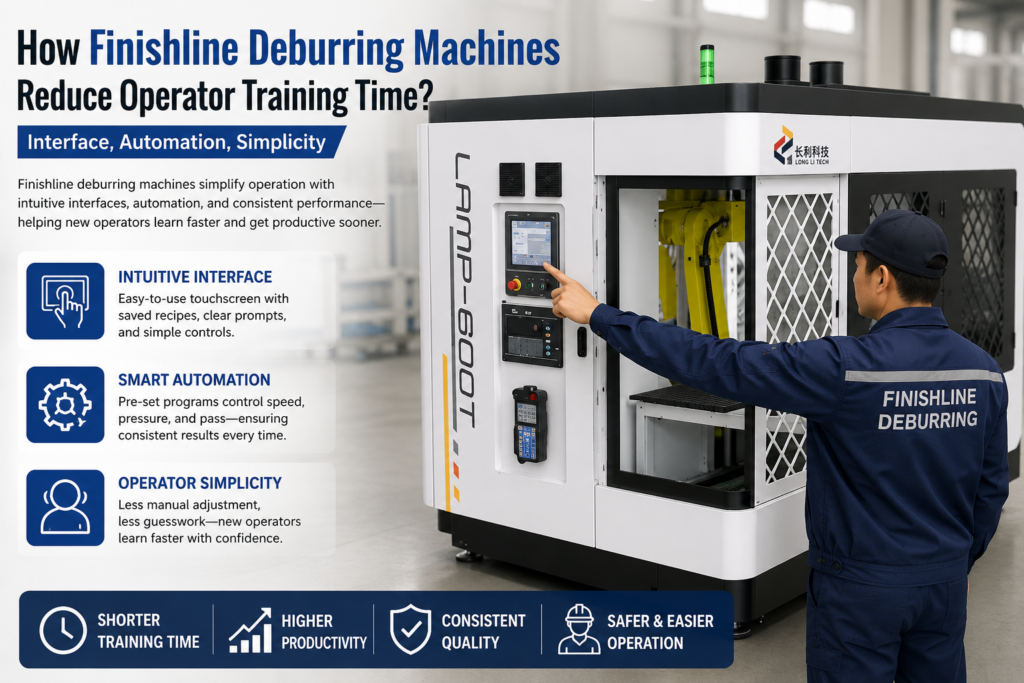
Key Facts About Finishline Deburring Machines
| Aspect | Detail |
| Main job | Removes sharp edges from cut or stamped metal parts |
| Screen type | Touchscreen with saved settings |
| Automation level | Semi-automatic to fully automatic, one pass |
| Common use | Sheet metal shops, car parts, appliance panels |
| Worker skill needed | Basic machine use; no hand-grinding skill needed |
Why Does a Simple Screen Help Workers Learn Faster?
A simple screen is helpful because it removes the hard choices. A worker must know the right pressure and angle on a hand-grinding bench. It takes months of practice. They are already programmed into the finish line machine.
Most machines allow an operator to select a saved setting for the job. This is called a recipe . Each recipe has the belt speed, feed rate and pressure programmed. It means the same part will come out the same way every time. New workers can learn this quickly, as they only pick, not guess.
The most help come from a few screen features:
- Job recipes saved. (Workers choose a setting instead of doing maths.)
- Clear alarms. The screen says simple words, not confusing code.
- Startup steps on display. The workers do not have to memorise a long list.
- Basic speed restrictions. Limits prevent new workers from choosing unsafe settings.
What Are the Pros and Cons of Automated Deburring Machines?
Automated machines produce more consistent results. They also help new workers learn quicker. But they cost more initially. Workers also need a little basic training in the care of machines.
| Aspect | Hand Deburring | Finishline Deburring Machine | Effect on Training |
| Edge result | Changes with each worker’s skill | Same result every time | Less time needed to build hand skill |
| Learning time | Builds over many months | Learned mostly from the screen | Faster start for new hires |
| Worker tiredness | High; hard hand work | Lower; machine does the work | Less coaching on body technique |
| Safety training | Wide; grinding and PPE rules | Focused on machine guards | Shorter, simpler safety steps |
The point is simple . Deburring by hand takes years of practice. Finishline deburring machine requires someone to learn its process. Which is why shops with new hires tend to go for the machine.
How Does Automation Change Skills Needed in Each Industry?
Automation changes the worker’s job from manual labour to watching the machine. That goes on in all industries but in a slightly different manner.
- Car parts shops: Workers find the correct recipe for the part. They have not hand finished each piece.
- Appliance makers: Workers assemble parts and check quality. They don’t have to be the same hand-finished style.
- Elevator panel shops: Workers compare finish to sample They don’t need the skill of the grind.
- General metal shops: Workers alter recipes for different sections. It’s feed speed, not hand technique.
What Mistakes Slow Down New Worker Training?
Not all training delays are the fault of the machine. They arise from the way the training is done. This is important for any shop using a finishing machine finishline deburring.
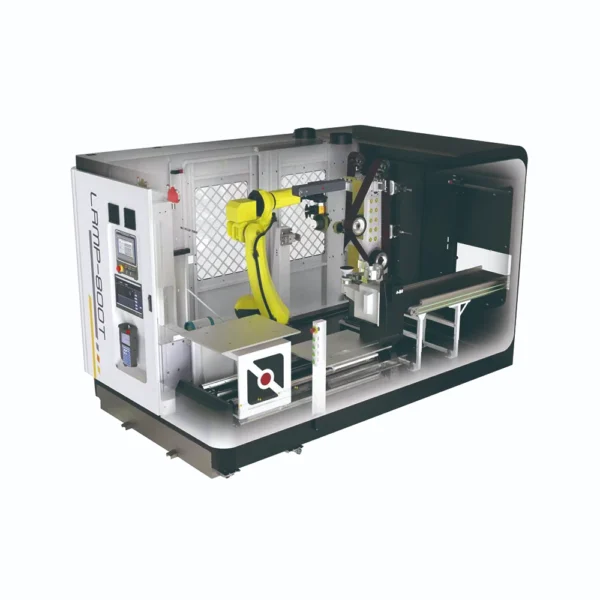
Common mistakes include not running practice with the recipe settings before running real parts. Another mistake is to only use the printed manual and not the screen prompts. A third mistake is not training on jams and belt wear before a worker’s first solo shift. Walkthroughs step by step for new workers in shops yield faster, safer results.
How Should a Shop Pick a Machine With Short Training Time?
The shop needs to find out how much the machine can do by itself. Machines with saved recipes and easy to read screens require less coaching. Machines with dials you set yourself tend to take longer to train.
A simple 3 questions help:
- Does the machine retain the job settings or must workers reset them each time?
- Are they plain language alerts, or they just number codes?
- Can a New Worker run a supervised shift the first week?
If the first two are yes and the third is possible then the machine is probably easy to learn.
Frequently Asked Questions
How long does it take to train someone to operate a finish line deburring machine?
A few days to two weeks is all it takes for most workers to do a supervised shift. That depends on their shopping history. Full solo work such as fixing jams could take a bit longer.
- Faster, due to prior machine experience.
- Recipes you’ve saved also speed up learning.
What skills does a worker need to get started?
Worker should have basic machine skills and knowledge of safety. You don’t need the skill to grind by hand. The first skills learned are reading part specs and using a touchscreen.
- No previous hand finishing skills are required.
- It helps a lot if you are comfortable with a touch screen.
What maintenance training does a finishline deburring machine require?
Basic maintenance training includes changing belts, cleaning, and reading wear alerts on the screen. This is often less time-consuming than hand-tool maintenance training because the screen provides clear warnings
- Daily cleaning is often a quick checklist.
- The machine maker determines belt change times.
Is a vibratory finishing machine a good trade for a deburring machine for the finishline?
It’s not a total swap, though. Vibratory finishing equipment is best used for small parts in batches. The finish line machine works best on long edges of sheet or panels. Many shops use both kinds.
- Good for small, loose parts. Vibrating tools.
- Finish line machines are good for long flat edges.
Conclusion
The time of training depends on how much work the machine does itself. Finishline deburring machine has simple recipes, easy screen. That helps new workers learn fast, without losing edge quality.
LongLi is a good choice if you are seeking for finishline deburring machine distributor. Their finishing line machines are based on the same principles discussed in this article. Simple recipe-based controls help new workers reach safe, good output faster.