
Is there one machine that will clean both metal brackets and plastic parts without changing the whole setup? Many factories ask this. Often they produce plastic and metal parts in the same shift.
Small parts deburring machines can handle more than one material. but the configuration is determined by which part is going through it. This article explains how the process is changed by material. It also talks about machine settings, where these machines are used and what to check before you buy one.
What Is a Small Parts Deburring Machine?
A small parts deburring machine deburrs and radiuses small parts. It works on parts after they are cut, stamped or moulded. The machine smoothes the part with belts, brushes or wheels. It doesn’t change the shape of the part. Most of the small parts deburr machines use a conveyor belt. And this keeps the pace on track throughout. Many of the models are small enough to sit beside a press or a moulding machine.
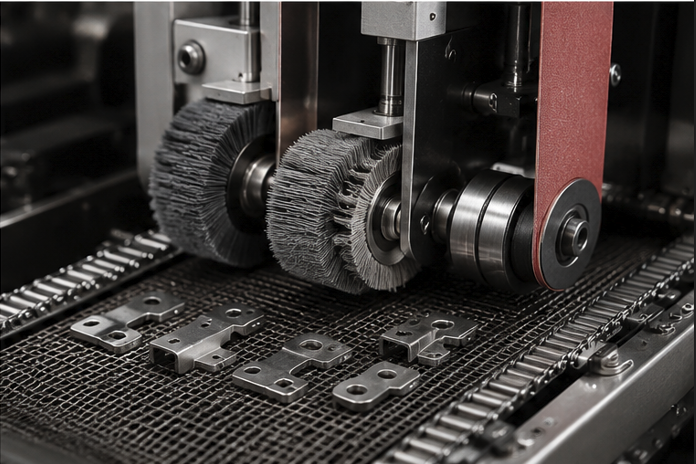
Key Facts at a Glance
| Feature | Description |
| Main function | Removes burrs and sharp edges from small parts |
| Common materials | Metal, plastic, and some composites |
| Feed method | Conveyor belt or roller feed |
| Finishing tools | Abrasive belts, brushes, or flap wheels |
| Typical part size | Small parts, usually under a few inches |
Can a Small Parts Deburring Machine Process Both Metal and Plastic?
A small parts deburring machine is available for both metal and plastic parts. But metal and plastic act differently during the process. Metal parts can handle more pressure and a rougher belt. They are not easily distorted. If the belt is too hot or too fast, plastic parts can melt or become soft. So plastic pieces require a lighter touch. A deburring machine for small parts often just needs new settings to switch from metal to plastic. It doesn’t need to be totally rebuilt.
Where Metal and Plastic Deburring Differ
- Heat sensitivity- Plastic may melt or bend due to heat generated by rubbing. Metal doesn’t.
- Grit choice- Use a coarser belt for metals. “Finer belt is more safe for plastic.
- Belt speed- The slower the belt speed, the less likely the plastic is to melt.
- Pressure setting- Metal can take hard pressure. Plastic requires light pressure.
How Do Machine Settings Change Between Metal and Plastic Parts?
There are 3 main settings on a small parts deburring machine. They are the belt speed, grit size and pressure. These settings work in conjunction. They dictate how much material is removed and how much heat is generated. Incorrect settings on plastic can result in burn marks or soft rounded edges. Incorrect settings often leave burrs on metal because lower settings will not cut away enough material.
Metal vs. Plastic Setting Guide
| Setting | Metal Parts | Plastic Parts | Why It Matters |
| Belt speed | Higher | Lower | Controls heat buildup |
| Grit size | Coarser (60-120) | Finer (150-320) | Balances removal rate and finish |
| Contact pressure | Firm | Light | Prevents warping or damage |
| Pass count | 1-2 passes | 1 slower pass | Limits repeated heat exposure |
The best deburring machine for small parts allows a worker to change these three settings rapidly. This stops the queue from stopping for long.
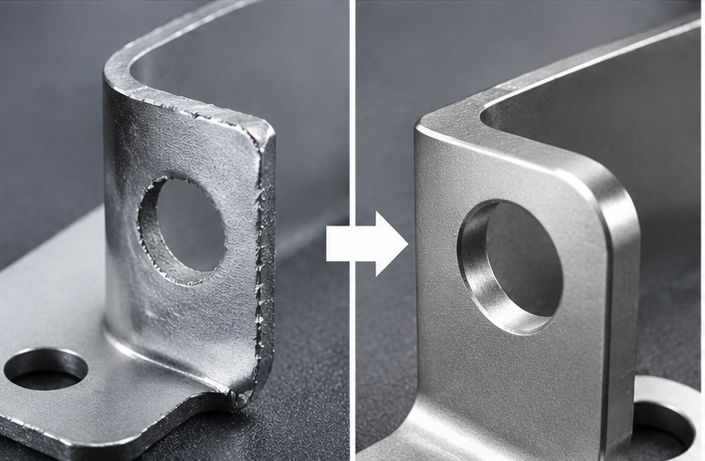
Which Industries Use Deburring Equipment for Both Metal and Plastic Parts?
The equipment is used by many industries to work on metal and plastic parts in the same location. Car parts manufacturers use it to clean metal brackets and plastic clips. Electronics makers use it to finish metal pins, plastic casings. Medical device makers want smooth edges on metal tools and on plastic cases. It keeps patients safe.”
Common Sectors Using This Equipment
- Automotive parts– brackets, clips and small metal fasteners
- Electronics– connector pins, plastic covers and small brackets
- Medical devices– tool edges and plastic cases
- Consumer goods– plastic casings and small metal parts
Sheet metal work. Deburr machine for small parts. Sheet cleans flat stamped parts before they get assembled
Why Do Buyers Source a Small Parts Deburring Machine From China?
The China made deburring equipment is less expensive and many buyers go for it. These factories still qualify for export rules. Many have years of experience exporting machines to North America, Europe and to Southeast Asia. A deburring machine can often be built with custom belt widths and conveyor lengths faster than a small local shop for a small parts manufacturer in China.
When buying a deburring machine for small parts supplier overseas there are a few more steps. Buyers should confirm:
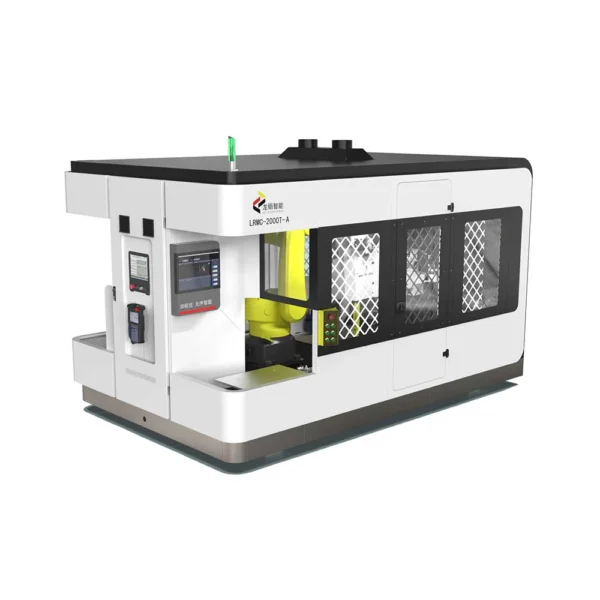
- Shipping and import costs to agree a price before you
- Easy to re-order spare parts and belts again later if needed
- Post-sale help with setup and training
- Warranty terms in writing, not verbal promises
What Should You Check Before Buying Small Parts Deburring Equipment?
When you know what you’re comparing it’s easier to pick the right machine. A small parts deburring machine manufacturer should be able to provide you with sample parts produced on their equipment. Don’t just use stock photos. Request a test drive with your own parts (metal and plastic) before you purchase.
- A few checks make the selection safer.
- Ask for a sample test on parts you actually make.
- Check the smallest and largest part size that the machine can handle.
- Check to see if the belt and brush parts are available locally or will be shipped in.
- Ask a small-parts deburring machine supplier for total wait time, not just build time.
- Look at power usage and floor space compared to your current.
Common Mistakes When Deburring Small Parts
Mistakes are still being made on the shop floor. The most popular one is to run plastic at metal speed settings. This can melt the edges in just a few pieces. Another error is not to run a test batch before running a full batch. Small changes in material can play differently in the belt. Also ignoring wear on the belts is a problem. Even if the rest of the settings are right an old belt will give you a rough uneven finish.
Key Takeaways
- Material Flexibility- one machine can work with metal and plastic with proper settings
- Setting Adjustments- belt speed, grit and pressure are adjusted based upon the material
- Industry Range- automotive, electronics, medical and consumer parts manufacturers
- China Sourcing- common reasons to buy from China are lower cost and fast build times
- Buying Checklist- Sample Tests and Part Size Range are More Important than Price Alone
Frequently Asked Questions
Can a small parts deburring machine be used for deburring stainless steel?
Stainless steel can be processed on a small parts deburr machine. It requires a coarser belt and a hard grip. Stainless steel is harder than mild steel and may need an extra pass. Things to check:
- Belt grit is meant for hard metal
- A slower feed speed to avoid overheating of the belt
- Check the belt often for the stainless steel wears it out faster
How long does it take to deburr the little parts?
Usually only a few seconds to a minute is required to deburr a small part. The time depends on the burr size and the material. Metal parts are often finished faster than plastic parts that need a slower pass. Time also is a function of:
- Conveyor speed
- Number of passes required
- Belt size and spacing between parts
Will deburring damage plastic parts?
If the speed or pressure is too high, plastic parts can be damaged during deburring. The right settings melt or round off soft edges. When workers: reduce risk of damage
- Slow belt speed for plastic
- Use a finer grit sanding belt
- First do a short run for a test
What grit size is best for deburring small parts?
For deburring small parts, grit size is typically in the 60 to 320 range. It depends on the material and finish you want. On metal a coarser grit removes material faster. Plastic is protected by finer grit. The choices are:
- Material, metal or plastic
- The finish you desire
- The size of the burr before you begin
One machine can go from metal to plastic and back again with no downtime?
A small parts deburr machine can be set up quickly for metal or plastic. Does not require a full changeover. Typical downtime is only a few minutes to change speed and pressure. The smooth transition depends on:
- Digital speed control units
- Predefined settings for standard materials
- Workers with knowledge of both material settings
Small parts deburring equipment pricing?
The cost of this equipment can range a great deal. Depends what size, how automatic it is and where the maker lives. Obtain a direct quote for the real price. Dual-material machines (metal and plastic) tend to cost more than single-material machines. Price is set by:
- Conveyor length & belt width
- How automatic the controls are
- The shipping costs, and where the maker is located
Conclusion
A small parts deburring machine can be used on metal or plastic, if the settings are right for the part. It is often the speed of the belt, the grit and the pressure that make for a clean finish or a damaged part, not the machine.
LongLi makes deburring equipment for this kind of work. Its settings are easy to change so it’s very quick to change from metal to plastic parts and vice versa instead of changing an entire line.